
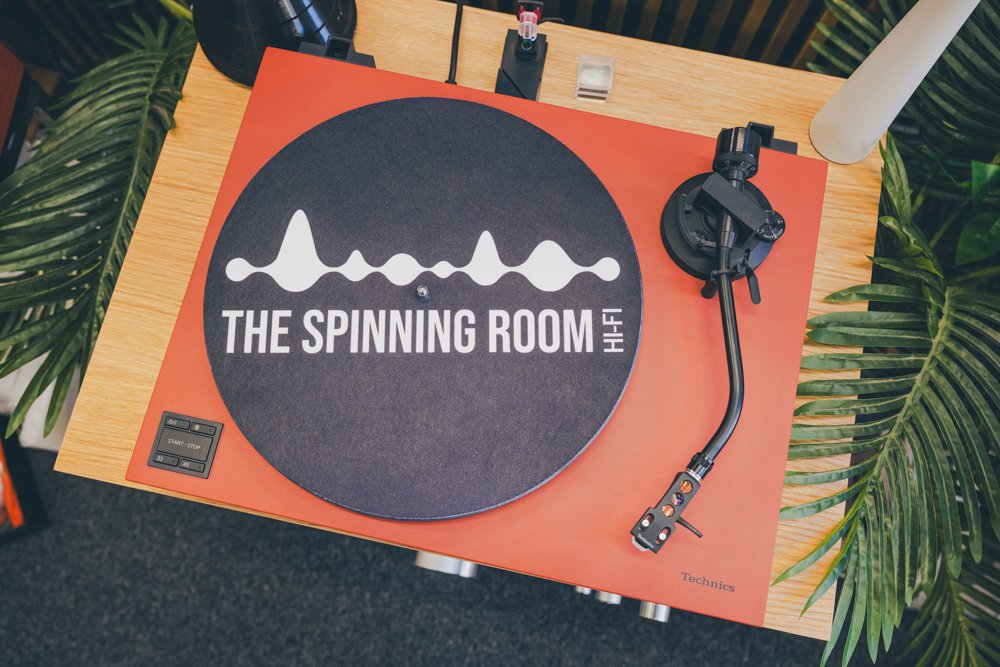
Romero Insurance talks to Paul Knipe, The Spinning Room Hifi Shop in Sunny Bank Mills
Romero’s Client Stories campaign finds special local businesses who have a story to tell. Each business have unique insurance requirements and quirks which would benefit from the attention of a dedicated broker. The campaign demonstrates how hardworking insurance professionals can positively impact their local area.
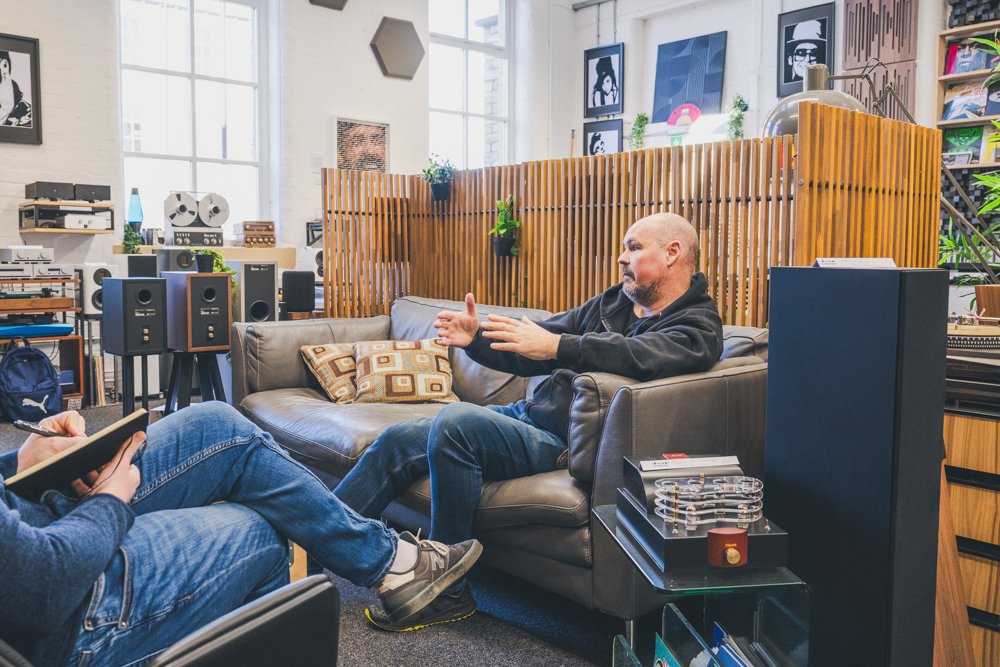
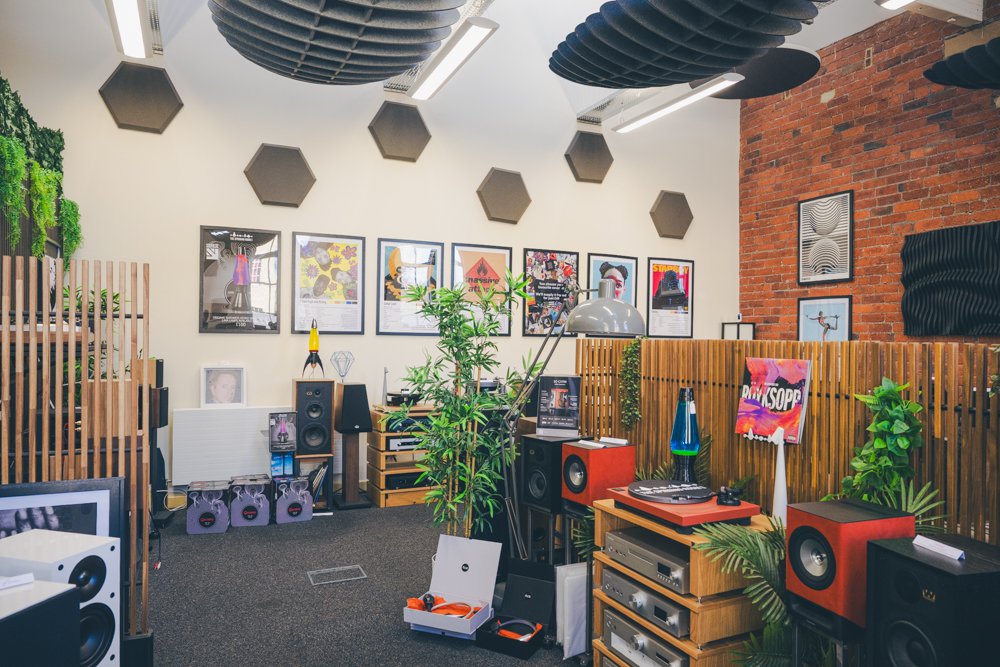
The Spinning Room Hifi Shop in Sunny Bank Mills, Farsley was founded by Paul Knipe. Paul has turned his hobby into a fulltime occupation, now running a small business out of a leased lot in the mill.
Known for it’s arts and crafts scene, Sunny Bank Mills is the perfect location for a hifi audio showroom and store. Born out of Paul’s first venture of accessorised furniture for home listening, Paul has built a network of commercial partnerships, alongside his wife and his business partner. He still makes and sells his own furniture which adorns the showroom – but he has morphed the business toward affordable high-end audio equipment for all ages.
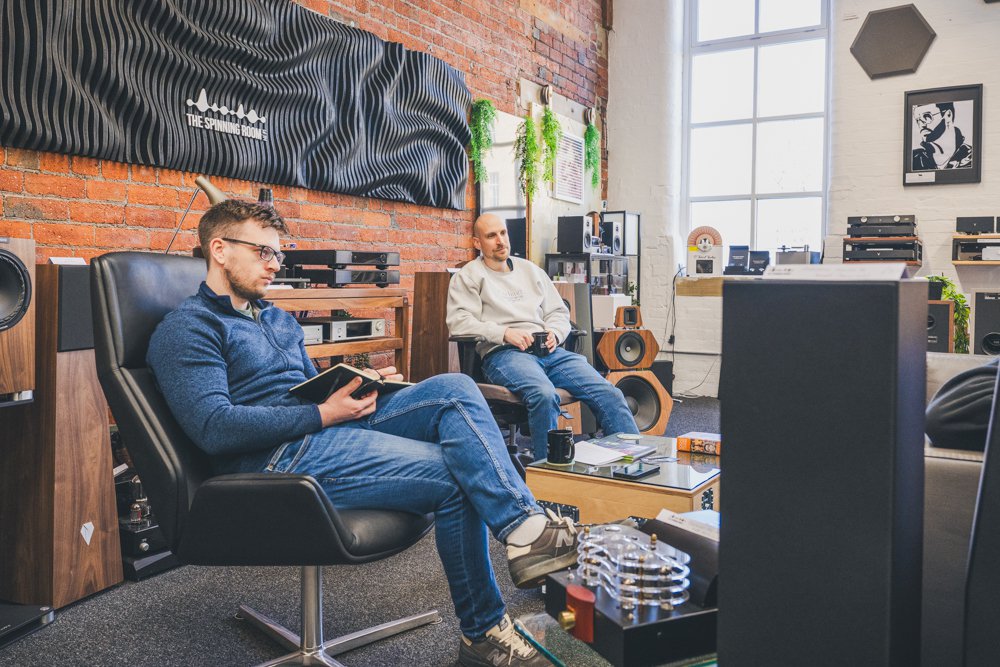
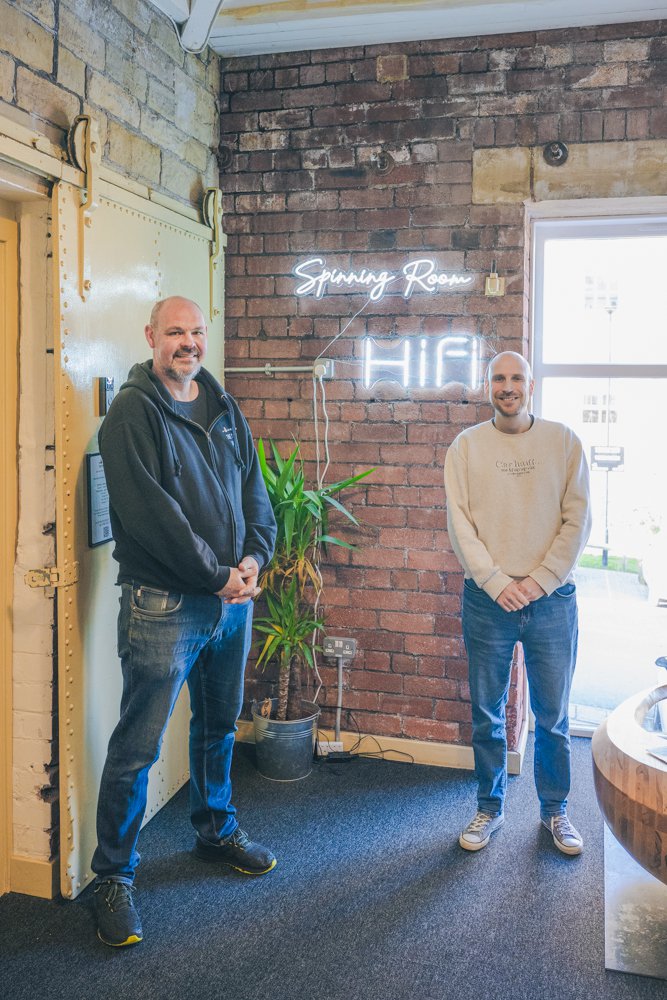
Nick Baister, Broker at Romero Insurance, met up with Paul Knipe at his premises in Farsley to discuss the story of The Spinning Room, the specifics of their unique insurance policy, and the motivation for opening their twin venue, a listening lounge across the hall.
What is the history of the Spinning Room Hifi?
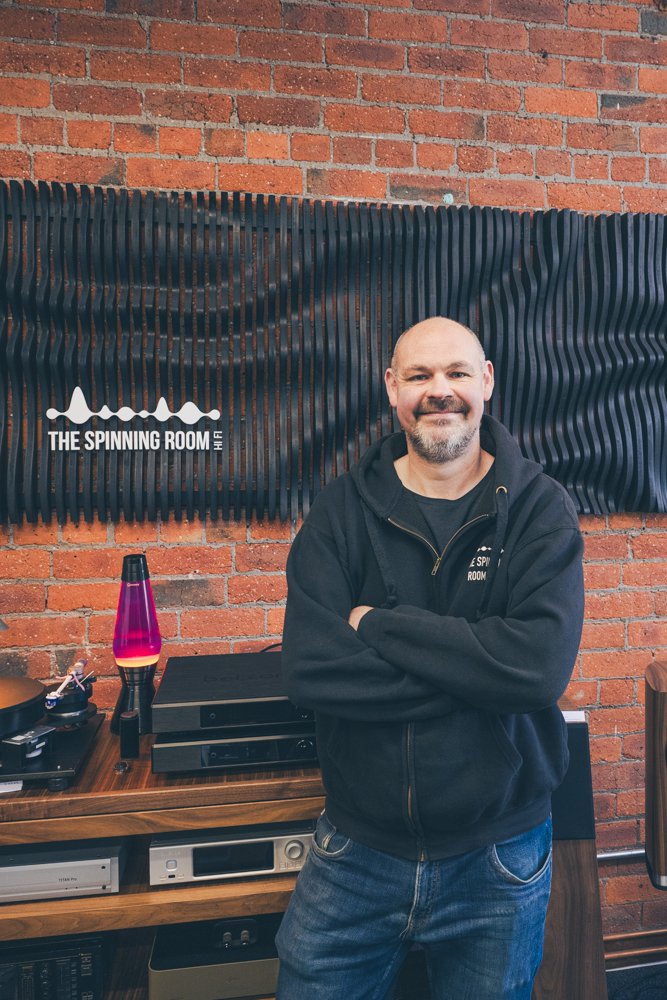
Paul Knipe:
I’ve been in the hi-fi industry since 2015. I originally started by manufacturing bespoke hi-fi furniture and accessories. I set the business up with my wife, and with a business partner called Curtis Young. Together we make decisions on products, not just on the commerciality of a product, but also whether or not we believe there’s a market for it.
My first significant premises was a lease in Bramley, where I would manufacture furniture to fit hi-fi products, and then sell the furniture upstairs in the showroom. But we ended up also selling the hi-fi products and making good margins.
The showroom in Bramley allowed us to host events – but the business was mainly appointment-only. One of the first accounts we took on was with Technics, and slowly I built out my network within the industry. We were wanting to shift from manufacturing directly for the customer, to retail and holding stock.
During the pandemic, it was unmanageable. I was manufacturing from home and having to keep up with online shipping. The challenge was a turning-point for the business, where I decided I needed a space properly designed for manufacturing.
So in 2023, I attended a record fair hosted at Sunny Bank Mill in Farsley. I know the area really well as I grew up in Pudsey. The owners of the record store in the Mill mentioned that the space next door was available. The room was too spacious and echoey initially, but the quirkiness of the mill was perfect for my business. Two days later, I had met with the mill owners and within four days I’d signed the lease. We were up and in operation within two weeks, having done a renovation. Fast-forward to today, we are approaching our three year anniversary at the Mill.
How has the business changed since its inception?
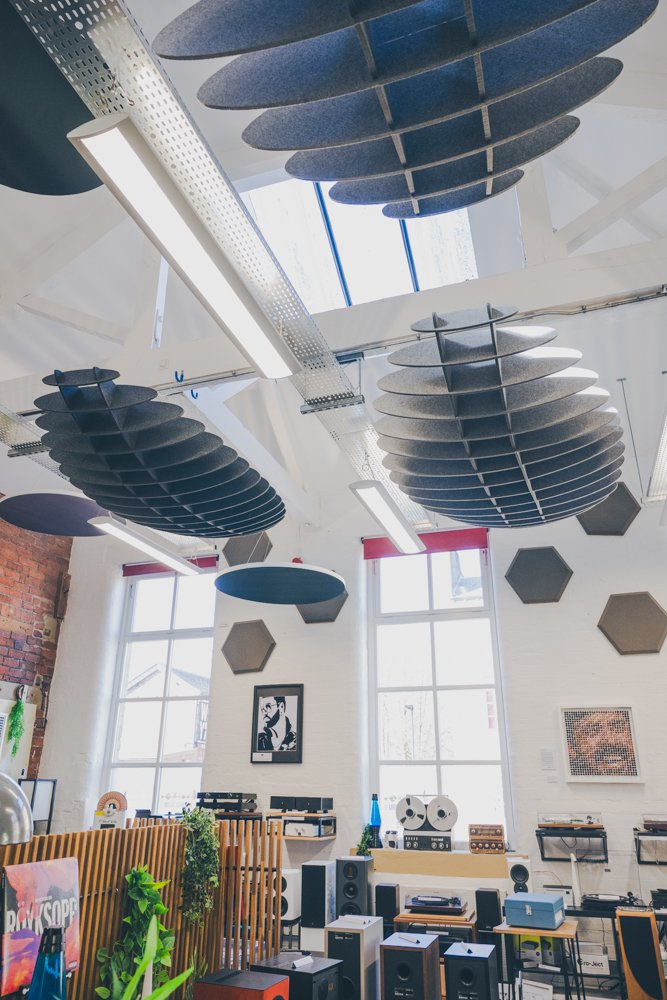
At The Spinning Room, we’ve always sold top of the range hi-fi equipment. Yet, having moved into the Mill, we quickly realised we were blessed with footfall, seeing people of all different ages, backgrounds and budgets walk through the doors. Very quickly, we decided to pivot the business, recognising an opportunity to bring young people into the hobby.
Historically the hi-fi industry is for fifty year olds and over; it’s becoming an aging industry. Instead, wanting to get young people into the hobby, we’ve got a turntable at the entrance for only £40. If a child buys the starter turntable, we’ll award the full amount against a full turntable once they’ve acquired the music and love for the hobby.
Affordability is key. Recognising that has helped accessibility into the hobby, and our turnover.
What are some of the different products you sell and some of the brand you work with?
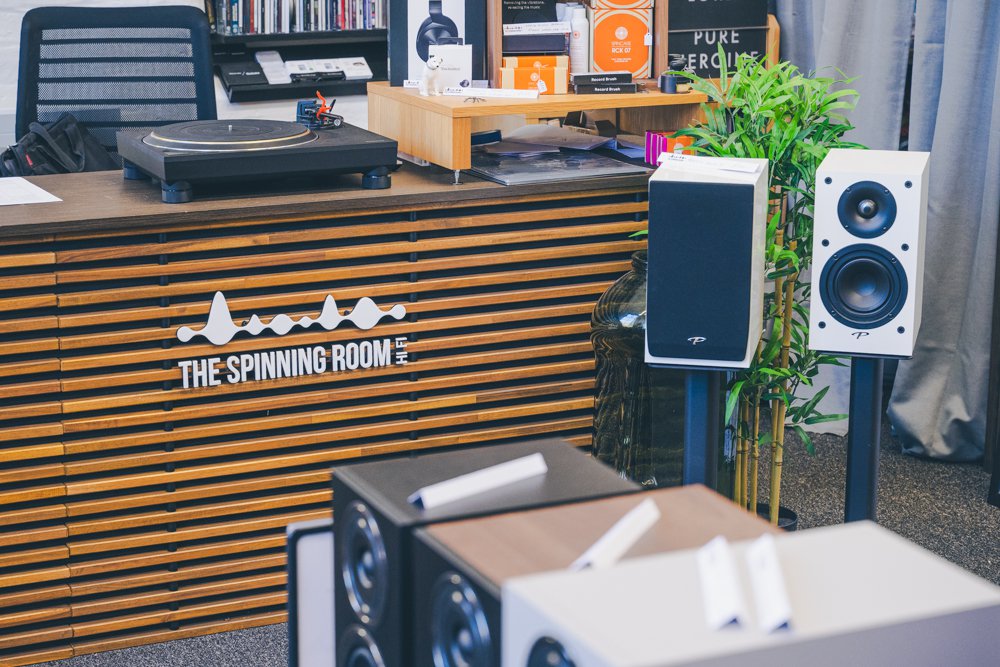
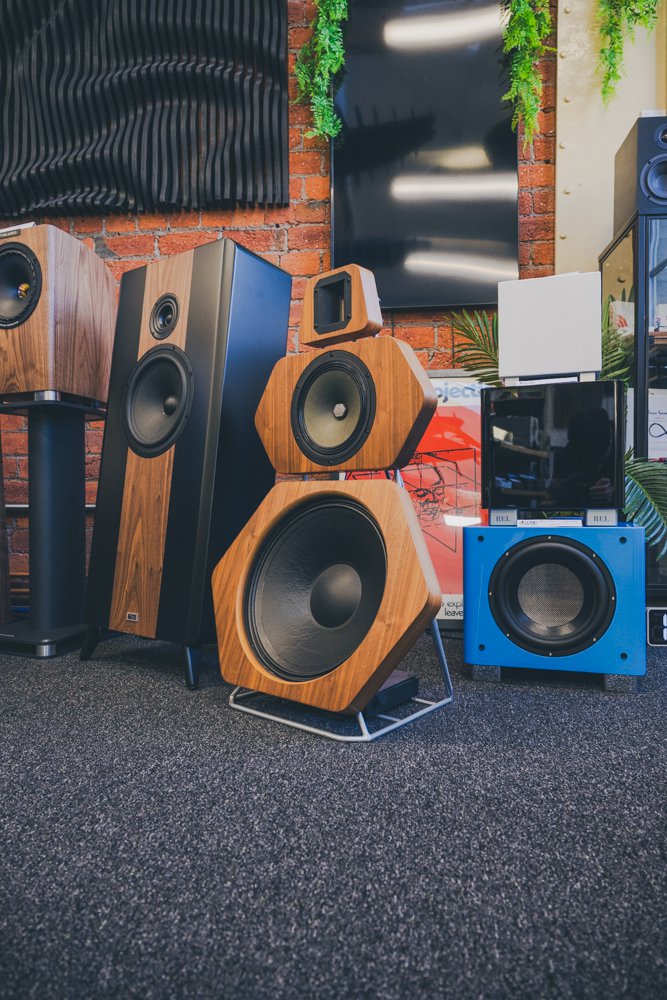
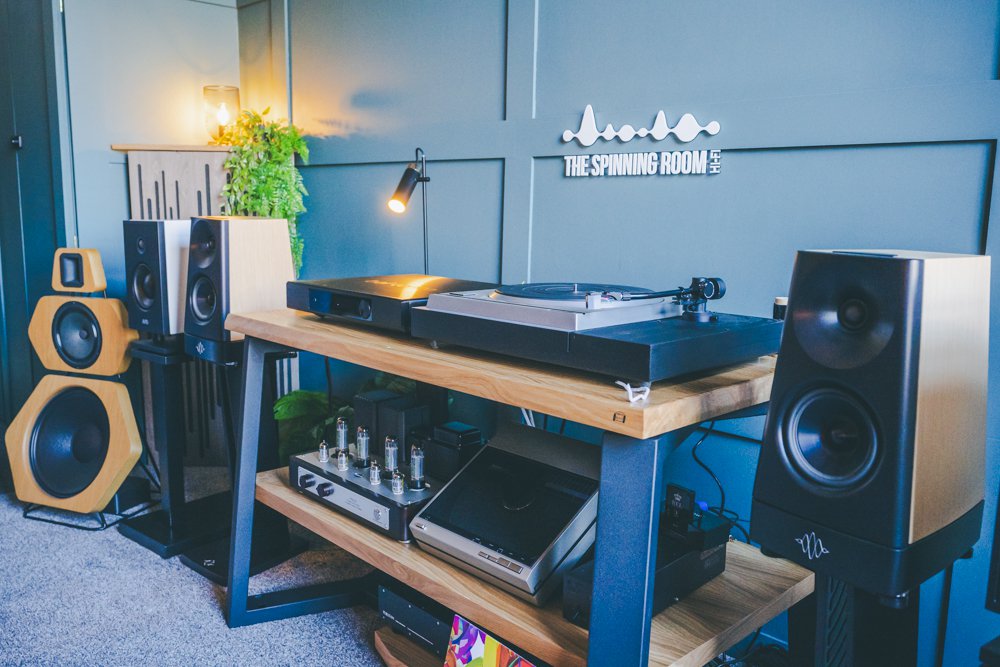
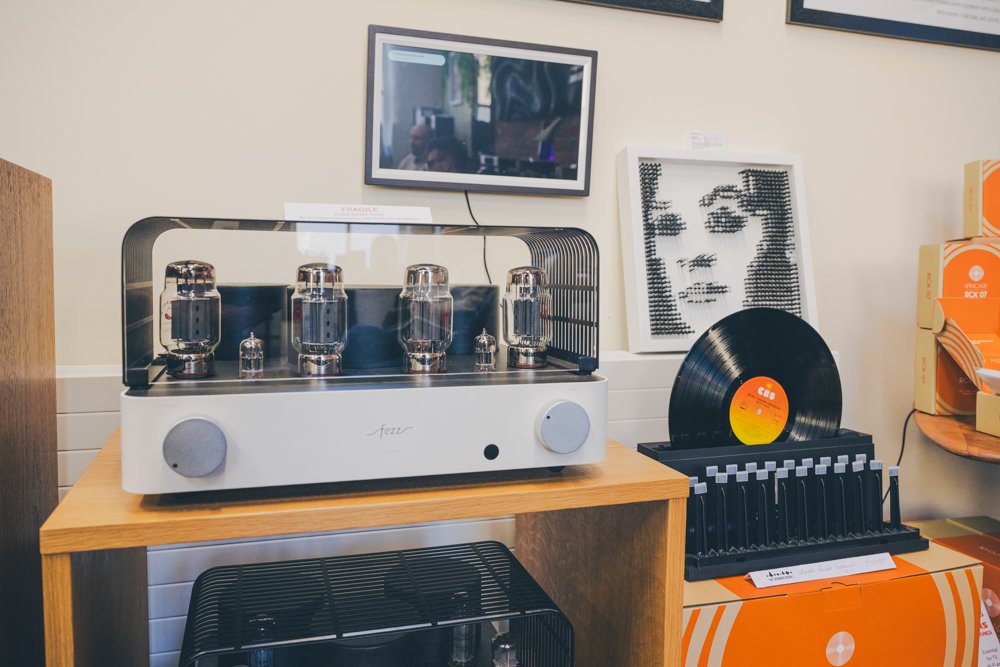
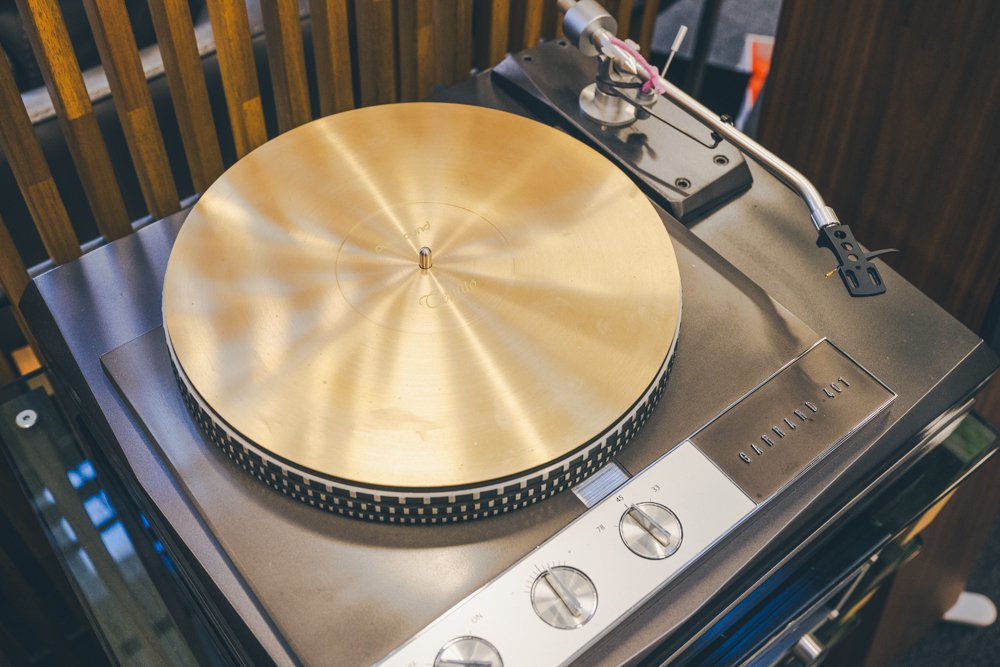
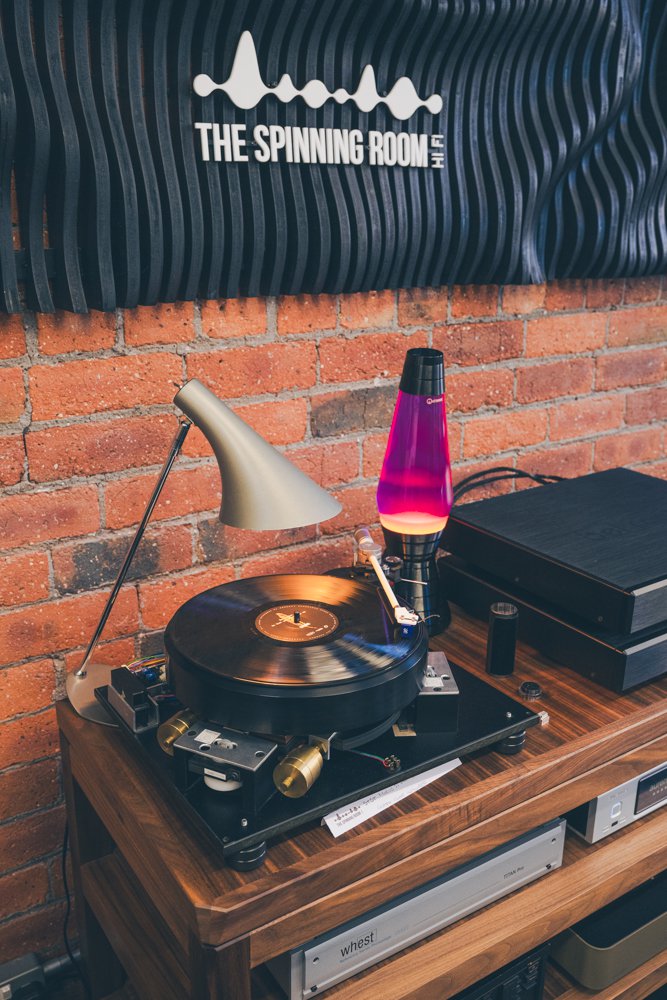
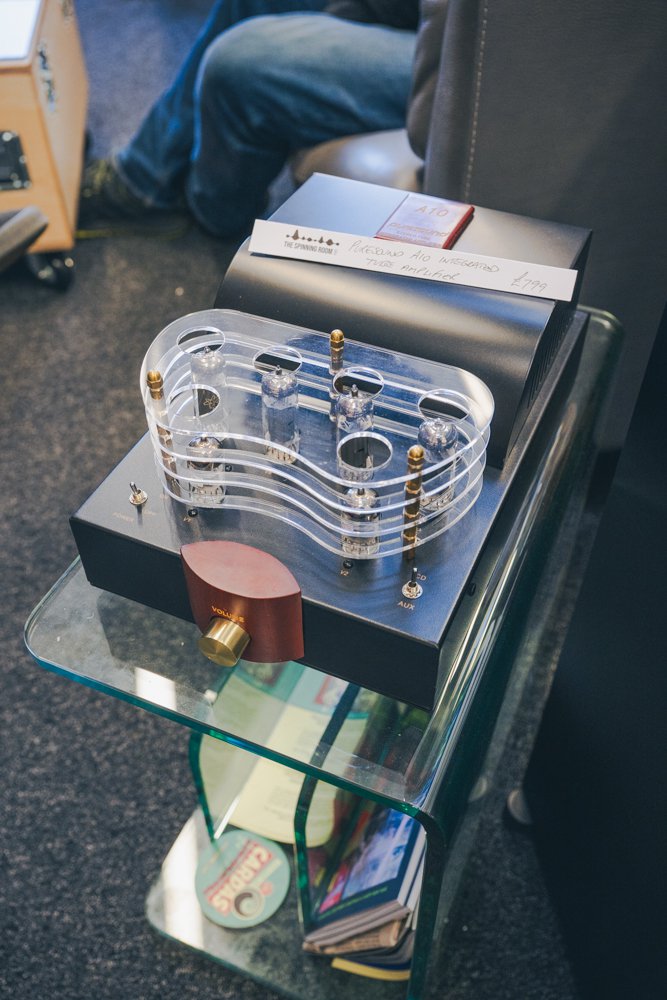
Technics is our core brand. The brand is a household name and cultural icon. But we also have a lot of brands that people won’t have heard of. We want to avoid completing with big sellers such as Richer Sounds – so we’ve sourced high-quality lesser-known manufactures such as Wharfedale, Mission, Ortofon. We’ve got British brands like Avid, and Ophidian which is a brand of speakers made in the Wirral, as well as some newer brands such as Audio Resurgence
We try and source aesthetic equipment for the benefit of the showroom. The doors are always open – the Mill is a destination location, so people come from miles around – anybody and everybody walks in. We are really blessed with people passing the positive word on about us. We’ve got a natural synergy with the other businesses here; an art gallery, a record shop, a listening bar.
Does the Spinning Room host or attend events?
Traditional HiFi stores will runs by appointment-only and occasionally run events. We don’t operate like a traditional HiFi store – we count on our footfall. The Mill hosts the Great British Sewing Bee, and also has a Christmas Market. 5,000 people attend the events, and we counted that on one event weekend we had 1,400 people come through our showroom.
We are going to start a customer-led narrated music night. We will host it in our new listening lounge; we’ll set up the system, invite customers to choose some music and tell the storey of why that piece of music is important to them. We want to create community.
Our brands are keen to get involved with events. I do attend tradeshows personally and meet with brands, but as a business this is nothing something we’ve considered.
What are the challenges facing your business?
Inclusivity around the hobby. We try to make our showroom as inclusive and friendly as possible. We have music playing at all times – we have a retired physics teacher called Dean who used to be a resident DJ at the Lead Mill, and he’ll often set up in the corner of the showroom. He plays the most amazing music.
People dance and sing and laugh, which is part of what I believe is important about music. It helps to overcome the historic model of the Hi-Fi business – quite stale and elitist. We try to talk to people when they walk in the store, and create that connectedness. One challenge is involving the younger demographic. We’re going to run an junior turntable training event because a lot of children have never been around turntables. We have dads bringing their daughters or sons in and they’re showing them how it all works, and we want to embrace that and support them.
Our youngest customer Darcy, age 9, saved up her own money just to buy turntable. Also Seth, age 13, bought his first turntable and a record and went home with it on his skateboard.
How much marketing and promotion do you do for your business?
At The Spinning Room, we host a Facebook group that’s about 600 people strong. We’ve got an Instagram page where we try to show the visual side of the hobby. We started doing TikTok, and we’re not far from a million views after about six months.
On TikTok, we have a 70/30 split in favour of men, whereas normally in my experience, the hobby is 99% male dominated. Our largest following online is within the 24 to 34 age group – which is the group that we most want to get involved with.
We’re selective as to where we advertise, trying to target catchment areas. We been advertised in the Yorkshre Post and at Otley. Articles will often be written about the mill and include The Spinning Room. The Mill owners understand how important marketing is – for example, Netflix were filming here last week, shooting Scorn, a new drama – which is an advantage to the businesses and the location.
How is The Spinning Room business performing financially?
At the Spinning Room, we’re still in the investment phase at the moment. We’re in a good place, we own most of the stock, and some on loan. This is an expensive industry, so as we take on brands we need to be mindful. The Spinning Room is a family business; we reinvest our profits, and we’re organically growing, but it’s got huge potential.
To overcome the financial challenges facing most hi-fi shops, we’ve broadened our product range to include visual items such as lava lamps or decorative signs. I was criticised by a competitor in the industry, but I replied there’s more than just sound to our hobby. It’s about creating a relaxing environment.
We’re really excited to open our new space, the listening lounge. It’s a separate lease, and is acoustically tracked, allowing any system tested in there to perform perfectly. The room is set up so it’s more akin to being at home, which is what the bulk of our customer-base are buying for. The new listening lounge will host some of the events we are looking to push.
My tip to any small growing business is to be super positive and don’t focus on the financial pressures. The business environment is terrible for everyone at the moment – but if you truly put your heart and soul into it, you’ll be in a strong position.
We don’t withhold too much stock because we find that we sell only what’s on display – so we won’t order multiple models. By limiting stock, we save money, but displaying items is essential for the business model. People want to see, hear and touch the products before buying – and it helps sell items too.
Does your business activity mitigate cyber risks?
The Spinning Room is an online seller, it brings in a portion of sales that we wouldn’t like to lose. Online sales are not a priority of ours and we are in the process of sorting a new website. The website is predominantly designed to increase footfall into the showroom; we try not to collect too much customer data.
As a small business owner, I understand cyber risks and the importance of cyber insurance. Even so, it’s a really steep learning curve, especially in a growing business. An insurance broker like Romero helps us understand those complexities and what risks we need to be aware of.
Why is the insurance policy for The Spinning Room complex?
Because the business is within Sunny Bank Mill, and part of a multi-business premises, so there was a question over security. Also we learned we required additional insurance in order to move from appointment-only to insuring customers on the premises, and for the stock we were holding and displaying.
The SME team at Romero Insurance explained the complexities and started the search for a specialised insurer who would provide adequate cover. I had to send ariel shots to pinpoint exactly where in the mill the shop was, an also demonstrate the extent of the multiple occupancy. We discovered many insurers wouldn’t provide cover or would quote a high premium of around £4,000, far higher than expected.
Thankfully, Romero Insurance managed to speak to a senior underwriter from Hiscox who lives in Farsley. He was familiar with Sunny Bank Mills and knew the risk was safe. Ultimately the premium came down to about £2,500, a big drop. We have a few conditions to follow, but nothing too drastic.
We would not have got the correct insurance at an affordable price without Romero Insurance. It really pays to have an expert in your corner, and it was only through Romero’s connections, speaking directly to underwriters, that we achieved this insurance policy.

What security is installed at your premises?
We have CCTV inside and outside the showroom. We’ve also got a big metal gate that guards the door – there’s only one entrance to the showroom, so it’s pretty secure. The mill provides a security guard who circles the premises and the car park. There is always a physical presence at the mill, with fob entry.
Another key point is that there are far more valuable and accessible items outside of the showroom, such as the pieces of art in the corridors. This lessens the attraction for anyone wanting to directly target the showroom. Also we are not on the ground floor, which elevates our security.
Fires are a bigger issue for us, at heightened risk due to being within a mill, in a shared space. We’ve yet to have a gang of people come in – that would make us really uncomfortable. The first piece of damage we’ve had was due to a 14 year old boy that should have known better. Our cameras caught it, and the footage shows that he prodded a speaker with his parents not watching – but we managed to repair the damage.
How is The Spinning Room’s relationship with Romero Insurance?
When we first started looking for insurance, we were recommended an independent insurance broker. We found them unresponsive and quite hard work – and they would send quotes which were unrealistic.
Looking to change broker, I rang up Romero Insurance, and purchasing insurance through Romero was straightforward and very responsive. The business was evolving quickly, and because of operational changes my policy needed reviewing. Nick Baister, Broker at Romero Insurance, was able to leverage his knowledge about the market and find a suitable insurance policy, and when he presented it, I was chuffed! I’ve acquired top level insurance for a negotiated price, and all my unique risks are covered.
For the upcoming listening lounge, we’re operating on a separate lease with different complexities, so I’m hoping Romero Insurance will help me out and place my insurance for that as well.
The excitement of running a business can quickly go out of the window when a problem arises. However with the assured support of Romero Insurance, I can operate worry-free.
Thank you to Paul for his time and taking part in our Client Stories campaign. We really enjoyed visiting The Spinning Room, and wish your business every success in the future.